
What should you never hand to a machine?
The real risk of AI is not that it fails. It is quiet deskilling through convenience: handing over judgement, hard conversations and complex problems one convenient decision at a time.
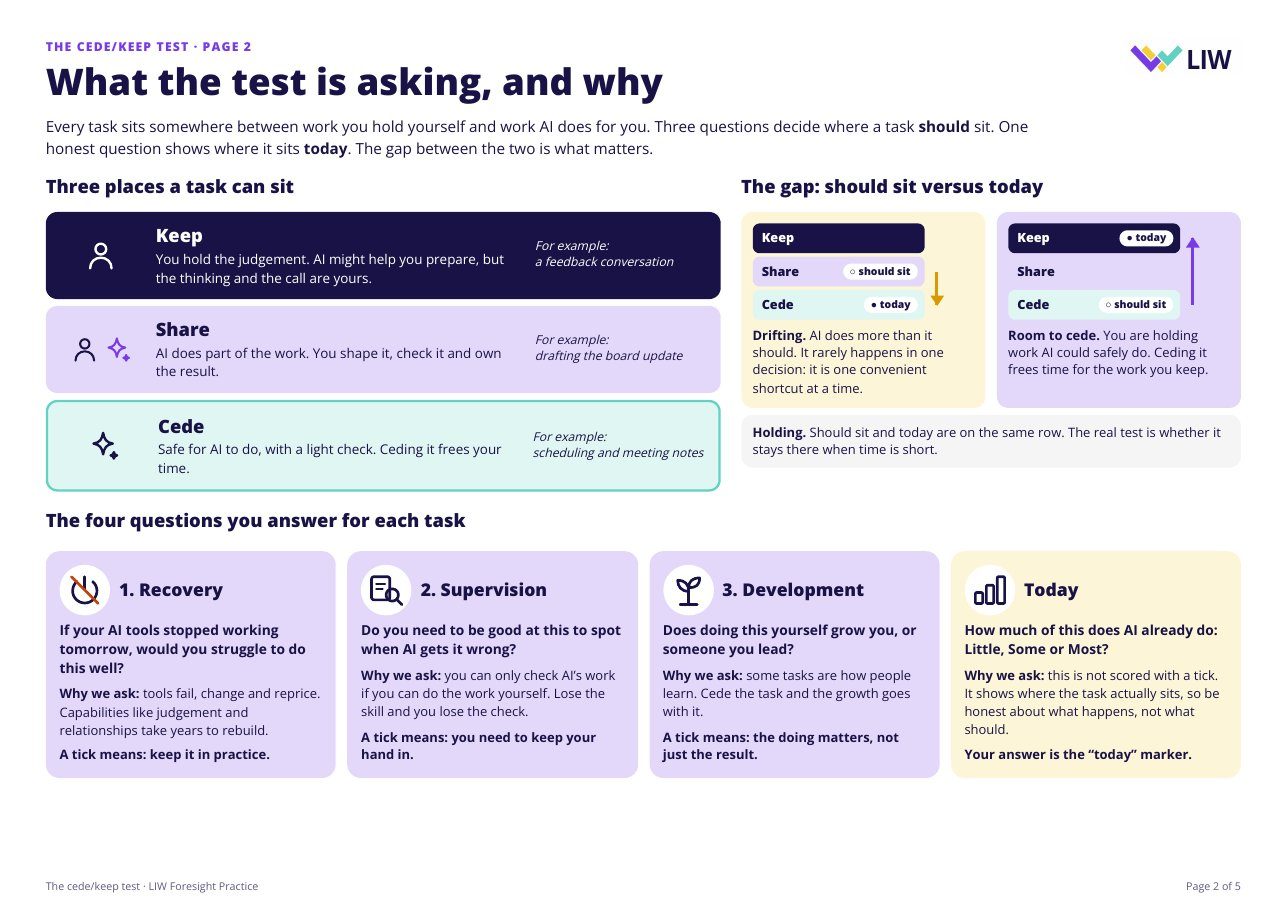
The cede/keep test helps you decide, task by task, what you should keep, what you can share with AI and what you can safely cede, and spot where you are already drifting. It takes about 35 minutes on your own, and works best when you then talk it through with your team.
Three tests and one honest question
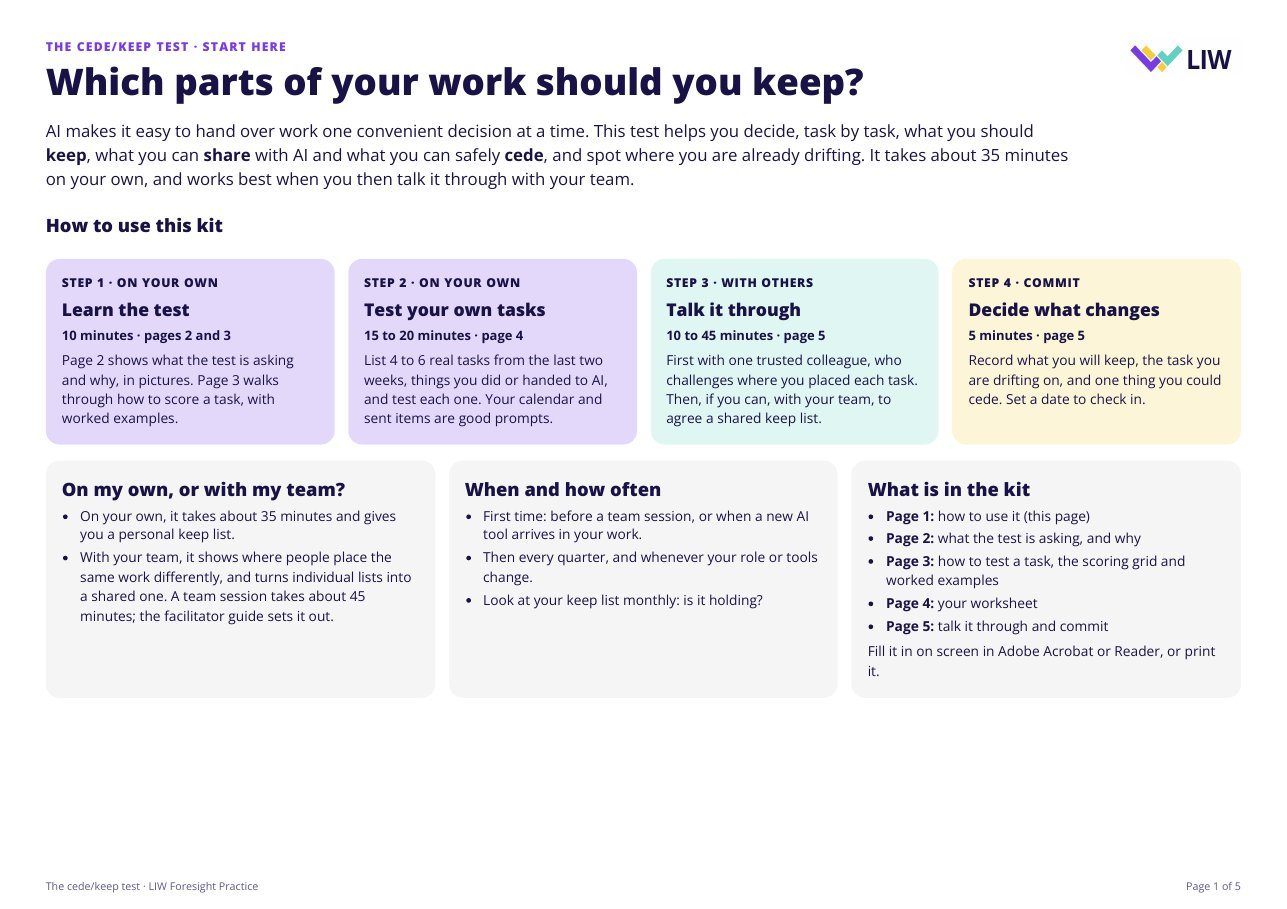
Every task sits somewhere between work you hold yourself and work AI does for you. Three questions decide where a task should sit. One honest question shows where it sits today. The gap between the two is what matters.
1. Recovery
If your AI tools stopped working tomorrow, would you struggle to do this well?
Why we ask: tools fail, change and reprice. Capabilities like judgement and relationships take years to rebuild.
A tick means: keep it in practice.
2. Supervision
Do you need to be good at this to spot when AI gets it wrong?
Why we ask: you can only check AI's work if you can do the work yourself. Lose the skill and you lose the check.
A tick means: you need to keep your hand in.
3. Development
Does doing this yourself grow you, or someone you lead?
Why we ask: some tasks are how people learn. Cede the task and the growth goes with it.
A tick means: the doing matters, not just the result.
Today
How much of this does AI already do: Little, Some or Most?
Why we ask: this is not scored with a tick. It shows where the task actually sits, so be honest about what happens, not what should.
Your answer is the "today" marker.
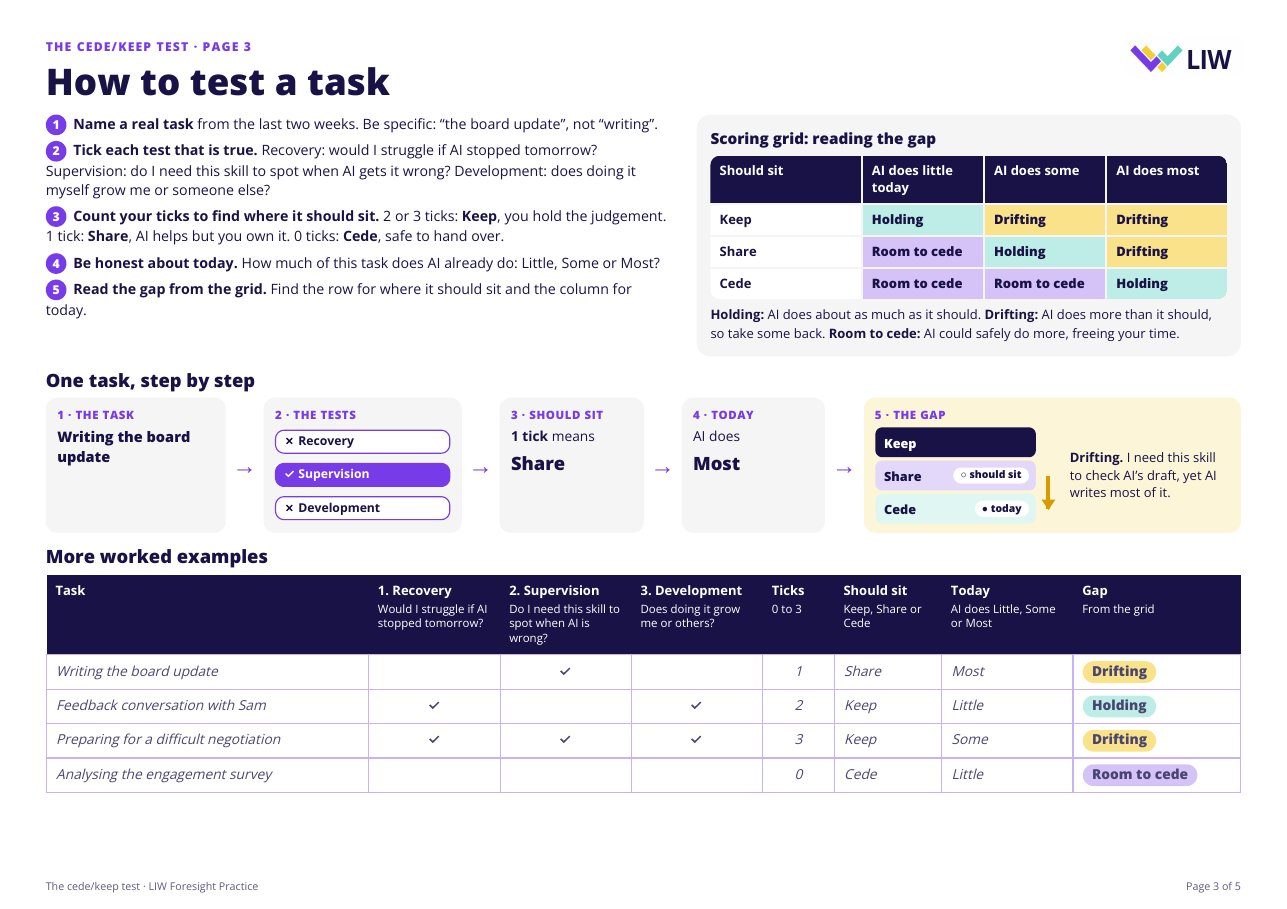
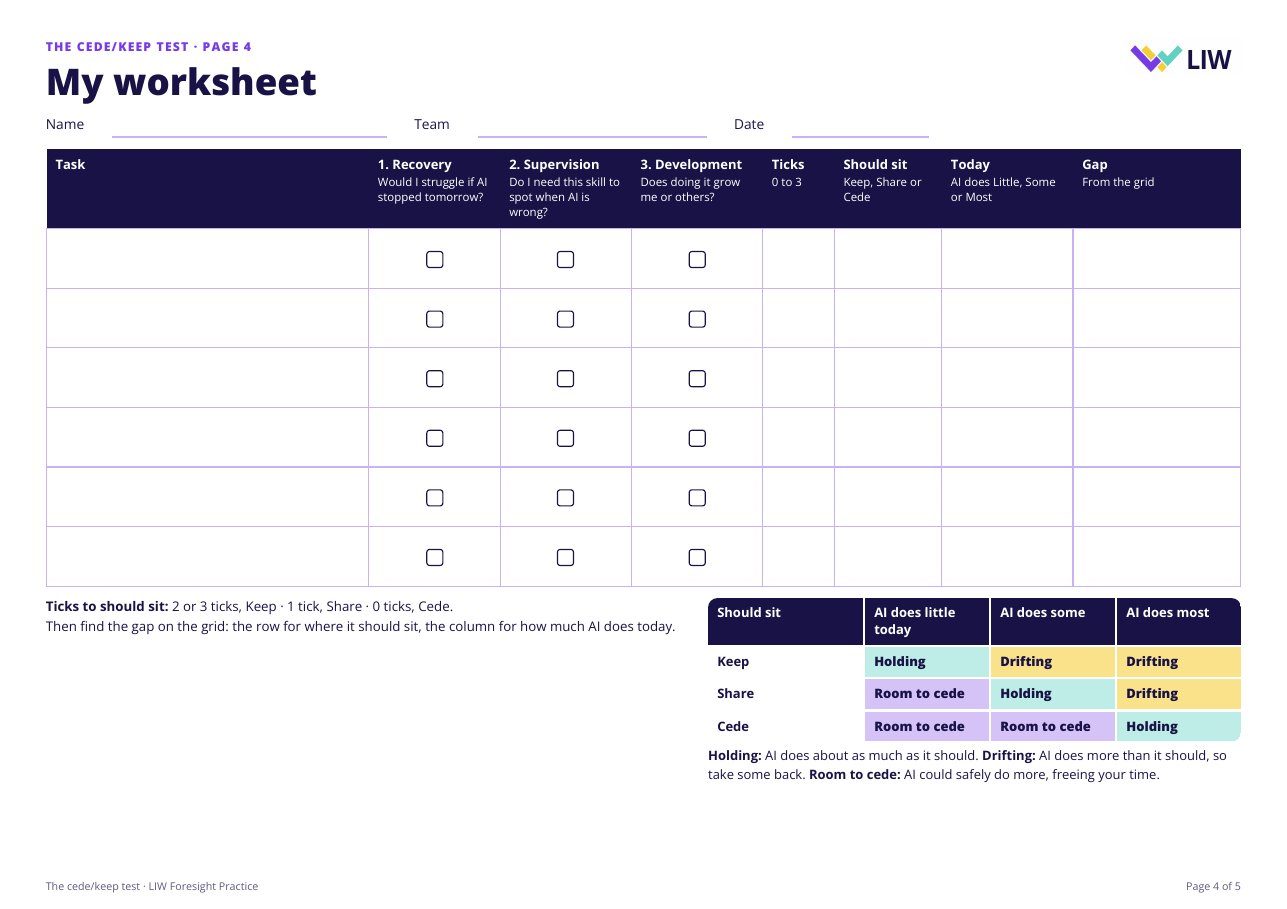
Count the ticks to find where it should sit
Then read the gap from the grid
| Should sit | AI does little today | AI does some | AI does most |
|---|---|---|---|
| Keep | Holding | Drifting | Drifting |
| Share | Room to cede | Holding | Drifting |
| Cede | Room to cede | Room to cede | Holding |
- Holding: AI does about as much as it should. The real test is whether it stays there when time is short.
- Drifting: AI does more than it should, so take some back. It rarely happens in one decision: it is one convenient shortcut at a time.
- Room to cede: AI could safely do more, freeing your time for the work you keep.
What's in the kit
Get the test kit
Tell us who you are and the download starts straight away.
Your test kit is ready
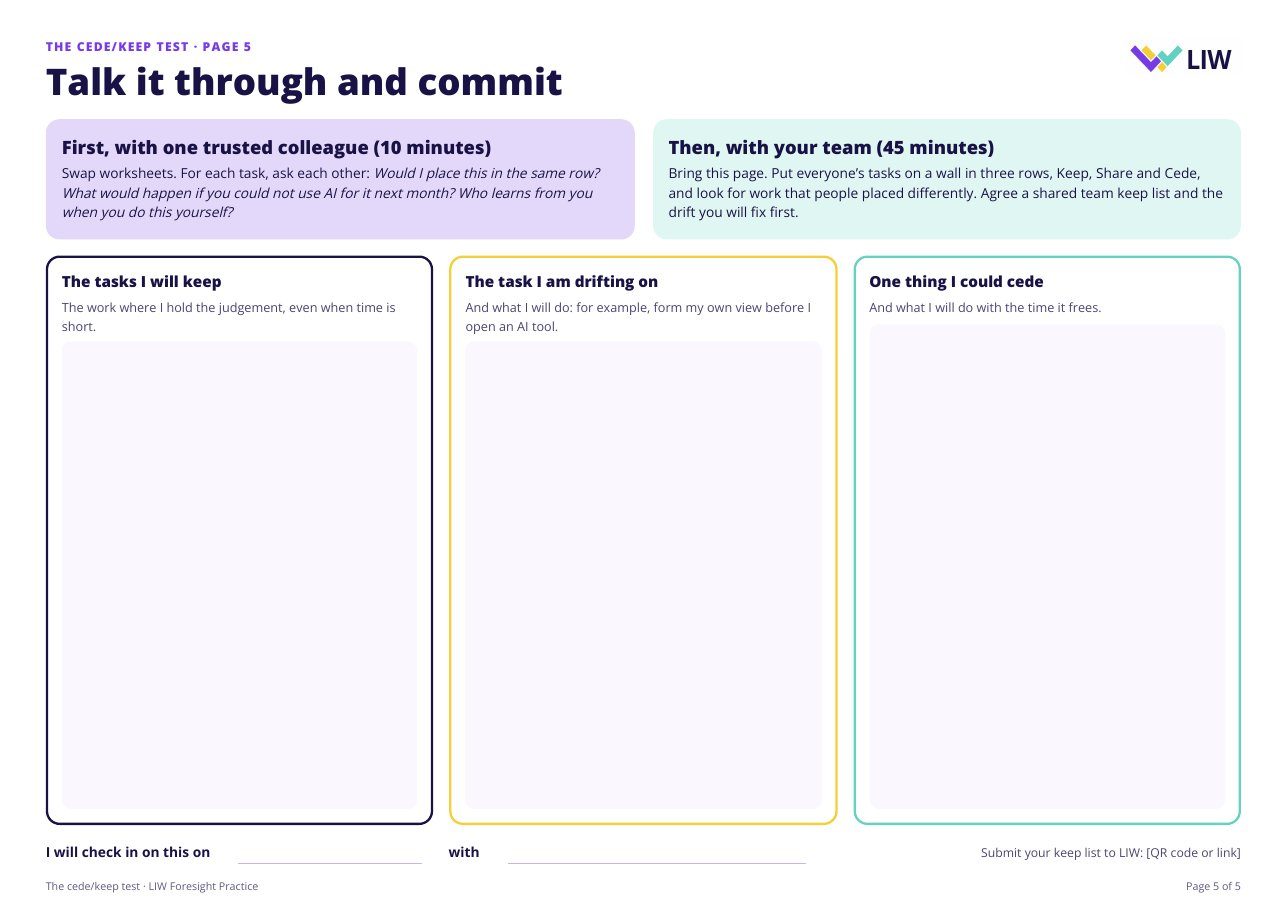
If the download didn't start, use the button below. Fill it in on screen in Adobe Acrobat or Reader, or print it. For a team session, print page 4 at A3.
Once your team has run it, book a free 30 minute debrief to talk through your keep list and the drift to fix first.
Done the test? Talk it through with us
Book a free 30 minute debrief with a Managing Consultant. Bring your test kit, or your team's keep list. We'll help you read the drift, test the keep list against what your organisation needs, and agree what to do first.